Antique Ivory Chess Sets and the UK Ivory Act: What you need to know
If you have inherited or acquired an antique ivory chess set, you may have discovered that selling it in the UK is subject to strict legal restrictions. The Ivory Act 2018, which came into force on 6 June 2022, prohibits dealing in items made of or containing certain types of ivory, including elephant ivory, unless the relevant legal requirements for an exemption are met.
The potential penalties for unlawful dealings are severe. As a result, many owners are understandably unsure what they can legally do with an antique ivory chess set they no longer wish to keep.

This guide outlines some of the options that may be available, answers frequently asked questions, and explains how to get in touch if you are considering gifting a set to a private collection.
Important disclaimer: This page is intended for general information only. It does not constitute legal advice, and no representation is made that it covers every legal requirement or circumstance. Laws and their application can depend on the particular item, the nature of the proposed transaction and the relevant jurisdiction. You are responsible for checking the current legislation and official guidance, establishing the facts about your own set, and ensuring that any action you take complies with all applicable laws. If you are uncertain, seek independent advice from a suitably qualified legal professional or contact the relevant government authority before proceeding. Nothing on this page should be relied upon as a guarantee that a particular transaction is lawful.
Four Options for Antique Ivory Chess Sets
1. Apply for an Exemption Certificate to Sell
One possible route to a commercial sale is an exemption certificate for an item made or existing before 1918 that is considered to have outstandingly high artistic, cultural or historical value. Applications are made through the government's online ivory service. The application fee is £250 and is non-refundable. The item is assessed against the statutory criteria, with expert advice provided as part of the process. You can find the official guidance here: Apply for an ivory exemption certificate.
This exemption has a deliberately high threshold. Rarity and the importance of the item as an example of its type are relevant considerations, alongside factors such as craftsmanship, condition, provenance and historical significance. Age alone, even considerable age, is not enough. Many antique chess sets will not meet the criteria, even if they are attractive, well-made or associated with a respected maker. An incomplete set or one missing pieces may also face difficulties in demonstrating its significance, although each application is assessed on its own merits.
2. Sell or Transfer the Set to a Qualifying Museum
The Ivory Act provides an exemption for certain transactions involving qualifying museums. These include specified transactions between qualifying museums and certain acquisitions by qualifying museums.
Not every museum or private collection automatically qualifies. If you are considering this option, check the museum's status and the precise conditions that apply before making arrangements.
A museum may be able to advise whether your set is of interest to its collection.
3. Keep the Set or Pass It Down in Your Will
If you wish to retain your antique ivory chess set for personal enjoyment, you can generally continue to own it without applying for an exemption under the Ivory Act simply to keep it.
You may also leave it to someone in your will. The Act distinguishes between owning an ivory item and dealing in it commercially.
Other laws may apply in particular circumstances, so it is sensible to check the relevant requirements if your circumstances change.
4. Consider Gifting the Set
If you no longer wish to keep your chess set, giving it to a family member, friend or interested collector may be an option.
The government guidance identifies giving an ivory item away as a gift as an activity that does not, in itself, require an exemption under the Ivory Act. However, it is important that the arrangement is genuinely a gift and does not involve payment, barter or another form of valuable exchange that could make it a commercial transaction.

Frequently Asked Questions
Can I list my ivory chess set on eBay or Facebook Marketplace?
You should not assume that an online listing or sale is lawful simply because the set is antique. Commercial dealings in ivory covered by the Act are prohibited unless the relevant exemption requirements are met. Online platforms may also have their own restrictions, which can be stricter than the law. The maximum penalties for unlawful dealing can include a fine of up to £250,000 or imprisonment for up to five years.
My chess set is old. Doesn't the pre-1947 antique exemption apply?
There is a specific exemption for certain items made before 3 March 1947 that contain less than 10% ivory by volume. The ivory must also be integral to the item, and the item must be registered in accordance with the legislation. This exemption is intended for items in which ivory forms a small part of the overall material, rather than items made substantially or entirely of ivory. A conventional ivory chess set would therefore not ordinarily qualify under this exemption. Other exemptions have their own eligibility criteria, so you should check the official guidance rather than relying on the age of the set alone.
Can I donate my set to a preservationist or private collector?
Giving an ivory chess set as a genuine gift may be an option under the Ivory Act. This can provide a way for an unwanted set to be cared for and appreciated by someone interested in chess history.
However, the circumstances of the proposed transfer are important. In particular, an arrangement involving money, goods, services or other benefits in exchange for the set may not qualify as a genuine gift. Before proceeding, both parties should check the applicable rules and satisfy themselves that the proposed arrangement is lawful. Where there is any uncertainty, seek independent advice.
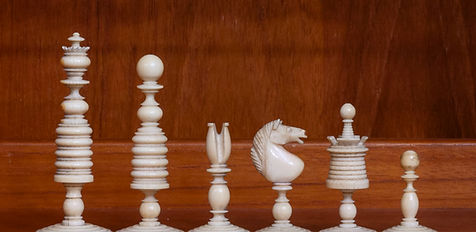
Got a Set You'd Like to Find a Home For?
If you have an antique ivory chess set that you no longer have space for, and you would like to see it preserved, studied and cared for as part of a dedicated private collection, I would be happy to hear from you.
As a passionate collector, I have been fortunate to have been gifted a number of chess sets over the years, and I greatly appreciate the generosity of those who have entrusted their sets to my care. I am always interested in discussing the possibility of accepting further gifted sets that can be given a suitable home and preserved for the future.
Every set and proposed transfer is different. I cannot guarantee in advance that I will be able to accept a particular set or that any proposed arrangement will meet the applicable legal requirements. Any transfer would need to be considered on its individual circumstances.
If you would like to discuss a set you own, please get in touch using the contact form on my website. I would be delighted to hear about your set and its history and discuss the possibilities.
Please remember: this page provides general information only, not legal advice. You are responsible for checking the law and official guidance relevant to your own circumstances and ensuring that any action you take is lawful.